Building an Effective Nonprofit Board
The Claim
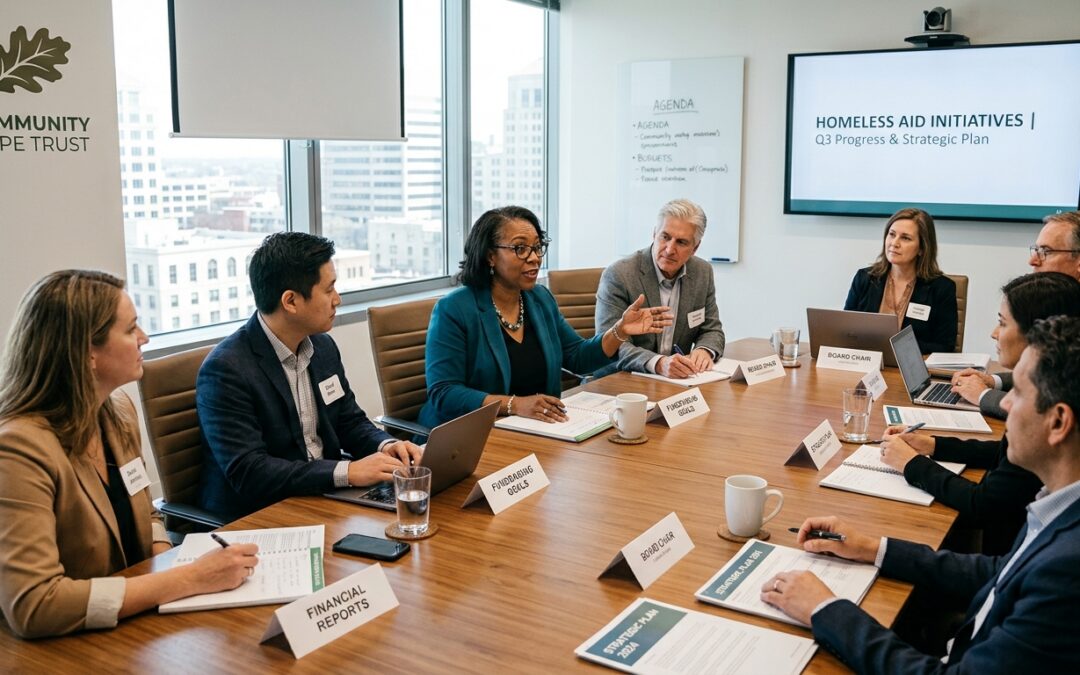
A nonprofit board doesn’t work because its members are impressive, generous, or well-connected. It works because someone designed its composition and rhythms around the organization’s actual gaps, rather than filling seats whenever one opens up. Recruit on vibes, and you get governance theater: quarterly meetings, polite nods, directors who couldn’t name the org’s top three risks if you asked them at the door. Recruit on design, and someone catches the budget shortfall in month three instead of month nine.
Why the Common Approach Fails
Most nonprofits build boards the same way. Someone knows someone. That someone is likable, has money, or both, and they get asked to join. The recruitment question is almost always “who do we know?” instead of “what do we actually need?”
Three things go wrong from there.
Skills cluster instead of spreading out. A board ends up with five people who are great at fundraising galas and nobody who can read a balance sheet, understand an employment claim, or speak knowledgeably about the program itself.
Roles stay vague. Without a written job description, “board member” becomes a title you hold, not work you do. Meetings turn into staff presentations that nobody pushes back on.
And governance quietly collapses into management. Founders and long-tenured EDs often treat the board as a friendly audience rather than a body with real fiduciary authority. Boards let this happen because disagreeing out loud feels rude.
Put those three together, and you get a board that shows up, rubber-stamps whatever’s on the agenda, and learns about a compliance problem the same week the staff does.
A Repeatable Framework: The 3-Column Board Design
Run this once a year instead of recruiting reactively.
| Duty | Who owns it now | Gap? |
|---|---|---|
| Financial oversight | Treasurer only, skims reports | Yes, no one else reads the 990 |
| ED evaluation | Board chair, informally | Partially, no written process |
| Fundraising | 5 board members | No |
| Risk & compliance | No one specific | Yes |
| Community representation | 1 member with lived experience | Yes, needs weight, not a token seat |
List every real duty down the left column. In the middle, write down who would actually notice if that duty were dropped, not just who could weigh in if asked. The right column names your gaps. That’s your recruitment brief. Not “we need more connected people.” More like “we have no one who owns risk.”
Three habits make this stick between annual reviews:
- Written role descriptions for chair, treasurer, secretary, and committee chairs, revisited yearly
- A consent agenda for routine approvals, so meeting time goes to the one or two items that actually need debate
- A standing risk item on every agenda, even for five minutes, so oversight doesn’t only happen at the retreat
A Realistic Example
A 12-person youth-mentoring nonprofit ran the exercise and found five members covering fundraising, three covering vague “general support,” and basically no one covering financial oversight past the treasurer’s quick skim. Nobody on the board had actually read the org’s own 990. The reserve policy hadn’t been looked at in four years.
They didn’t go recruit a 13th well-connected member. They brought on a credit-union CFO to chair a new finance committee, gave the treasurer a mandate to present a one-page dashboard every quarter, and moved routine votes to a consent agenda. Meetings dropped from 90 minutes of updates to 45, with the extra time going toward a cash-flow risk nobody had flagged before.
Six months in, a board member caught a vendor overbilling issue during a routine dashboard review. The year before, nobody would have seen it.
The Limitation and Equity Consideration
Here’s where this framework can quietly backfire. “We need a lawyer and a CFO” tends to point recruiters back toward the same narrow pool: credentialed, often white, often well-off networks. That’s especially true at under-resourced orgs that already have a thin volunteer bench. A skills gap analysis can look objective and still reproduce the exact recruiting pattern that got you here.
Guard against it on purpose. Treat lived experience with the population you serve as its own seat with real decision-making weight, not a token add-on filled last. Pay stipends or reimburse expenses where you’re legally able to, so board service isn’t limited to people who can afford to volunteer their time unpaid. And keep the fundraising-capacity seat separate from the oversight seats, so that financial contribution never becomes an informal price of admission to a voice in governance.
A board can be technically well-designed and still only draw from one network. That’s not good design. That’s just efficient narrowness.
Next Action
Before your next board meeting, build the 3-column table yourself. List your core duties, write down who actually owns each one today, and circle the gaps. That one page will tell you more in twenty minutes than another year of “who do we know?”
Follow us on LinkedIn – Build, Grow, Convert.

About Mike Doherty
Mike Doherty serves as Chief Experience Officer at Greening Projects, a nonprofit organization dedicated to transforming underutilized urban spaces into vibrant green areas that benefit communities and the environment. With a passion for urban revitalization and community-centered approaches, Mike oversees the end-to-end experience of residents, volunteers, municipal partners, and donors involved in the organization’s green space conversion projects. His role encompasses strategic vision, community engagement, and ensuring that every interaction reflects Greening Projects’ commitment to creating accessible, sustainable urban oases. Under his leadership, the experienced team focuses on making green space development collaborative, impactful, and meaningful for all stakeholders while fostering stronger, healthier neighborhoods through environmental transformation.